 drone-reviewm.com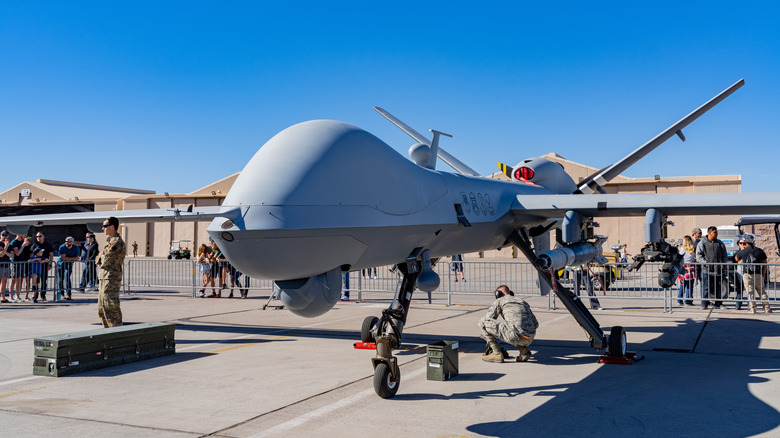
The U.S. Air Force has made the decision to retire the MQ-9 Reaper, with plans to phase out the UAV platform by 2035. The Reaper has been an integral part of surveillance and forward strike capabilities for two decades, but it’s a slow-moving aircraft that the Air Force is clearly looking to improve upon.
To the casual observer, removing the Reaper from service might sound like a strange move. The aircraft has flown countless missions in a wide range of hazardous combat zones around the world. The platform allows service members to achieve their missions without having to enter dangerous situations. Yet, as the national defense strategy continues to evolve over time, there’s a constant need to reevaluate the efficacy of existing tools and make preparations to replace those which have aged out of their peak effectiveness. With the threat landscape seen by America’s military continuing to change, a new approach may be required in the coming years.
Even so, voices from across the Intelligence Community and defense industry are pointing to areas in which the MQ-9 Reaper can still make a positive impact, even after a new platform takes its place over the battlefield.
The Reaper is the U.S. Air Force’s most cost-effective aerial tool
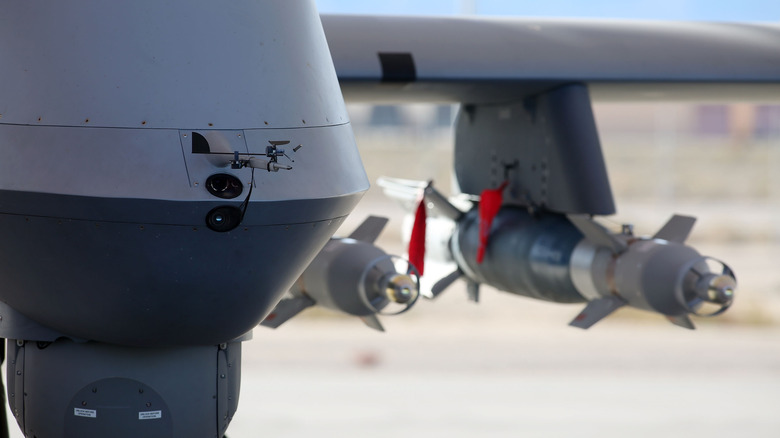
Before getting into the nitty gritty, it’s important to understand the value that the MQ-9 Reaper brings to the Air Force in modern combat efficacy. UAV technology has revolutionized the mission capabilities of the modern Air Force. By removing pilots from the aircraft itself, remote operators can perform a range of combat duties without placing them in the line of fire. These tools make it possible to engage in risky operations without having to weigh the lives of pilots alongside the priorities of a successful outcome. In a November 2021 policy paper for the Mitchell Institute, Retired Major General Lawrence Stutzreim suggests that the MQ-9 Reaper “is one of the Air Force’s most relevant aircraft,” even as talks of phasing the platform out take place in real-time. It can achieve a flight ceiling of 50,000 feet, and remain over a target continuously for as long as 24 hours.
In terms of cost-effectiveness, no other aircraft can operate with the same shoestring price tag that the Reaper exhibits. Four MQ-9s along with the corresponding ground infrastructure cost roughly $56.5 million, in contrast to a single, sans-engine F-35’s $75 million and an F-22’s $142 million-plus unit costs. In addition, the MQ-9 Reaper adds a flight hour cost of about $3,500 compared to the F-16’s $8,000 flight hour operational cost. The Reaper is both relatively inexpensive and heavily leaned on to provide an elongated mission window in support of overwatch capabilities, target tracking, and remote strike options that aren’t possible in crewed flight.
Reapers won’t survive hot conflict with Russia or China

American military preparedness lies partially in the ability to predict the types of conflicts that service members will eventually face. During the Vietnam War, innovations in dogfighting, STOL capabilities, electronic warfare, and aerial transportation each played a crucial role in the military’s ability to wage war effectively. The geopolitics that have emerged following the outbreak of war in Ukraine has clearly initiated a new phase of thinking among the Pentagon’s top brass. In late 2021, amid the Kremlin’s increasingly belligerent language and behavior surrounding Ukraine, new discussions over the utility of the MQ-9 Reaper came into play. The Reaper has been at the center of budgetary and utility discussions for a few years, and in March 2020 the House Armed Services Committee opted to stop purchasing new Reapers.
What this new line of thinking boils down to is a shift in mission priority. With a winding down of engagement in Afghanistan now complete, American policymakers are viewing a potential conflict landscape that’s dominated not by asymmetrical warfare (as has been the case throughout Middle Eastern military operations), but rather a more conventional engagement with Russia, China, or both. If American troops eventually enter the fighting in Ukraine, Reaper drones won’t provide a tactical advantage since they’re easily shot down by a conventional, governmental enemy like Russia. The same is true for conflict with China.
The utility of the MQ-9 Reaper remains broad, however
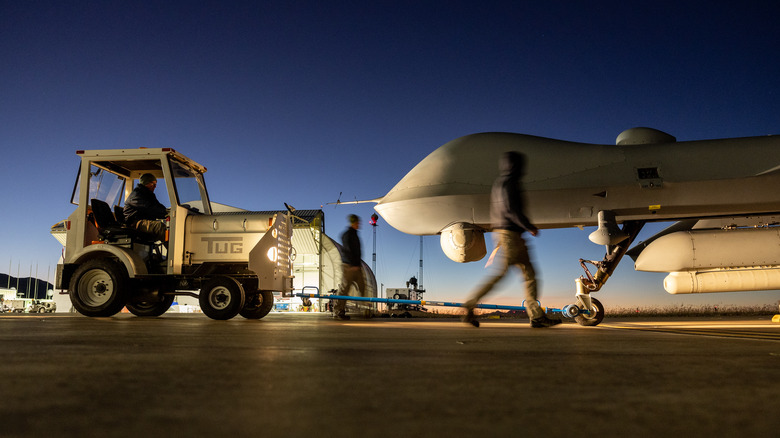
Even with concerns over an ineffectual asset in potential hostilities with Russia, China, or other conventional militaries, the Reaper remains a broadly valuable asset to the U.S. military. Its role has spanned a wide range of mission specifics from long-range (and long-duration) reconnaissance to hunter-killer requirements. Drone strikes and UAV recon missions have continued to expand in areas beyond the front lines of Afghanistan, Iraq, and Syria. While missions were flown regularly and prominently in Pakistan and elsewhere for many years, they have also quietly been increasing in volume across Africa as well. In 2021, drone activity (conducted by the U.S. and others) was reported to have occurred in at least 20 nations across North Africa over the previous 14 years, including the Sahel just below it and the Horn of Africa (in other words, nearly every country in northern Africa).
Expanding usage in another part of the world isn’t the only reason that critics are worried about a reduction in the U.S. drone fleet, though. Because of the tool’s significantly lower cost of operation in comparison to every other aerial asset fielded by the Air Force, military specialists have noted additional reconnaissance and threat detection operations that the long-range UAV platform can be used to support. For one thing, Russia and China both routinely engage in aerial brinksmanship. Tu-95 bomber flights nearing the Alaskan coast take place roughly every two months, with one as recently as February 2023. The Chinese military has also flown dozens of fighter jets over the Taiwan strait’s median line recently in a similar display. MQ-9 Reapers could serve as intercept vessels in this notably cooler segment of aerial engagement.
Source: http://www.slashgear.com/1281330/why-us-airforce-retiring-mq-9-reaper-drone/
You may also like

