 drone-reviewm.com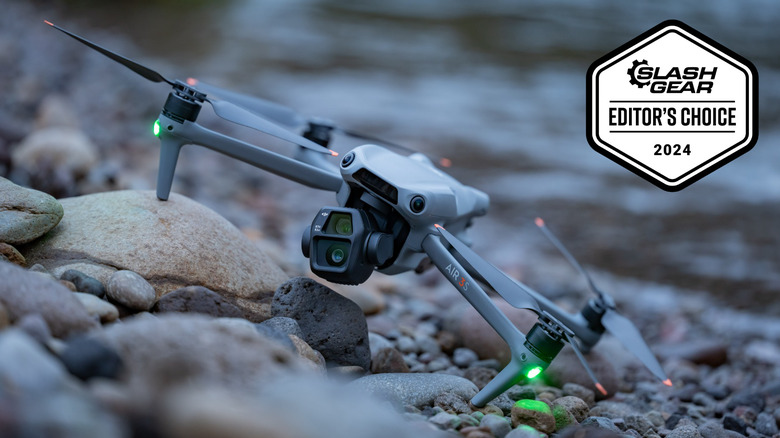
- 1-inch sensor delivers excellent photo and video quality
- Dual-camera system is a versatile filmmaking tool
- Quiet and powerful
- Advanced subject tracking and obstacle avoidance
- Innovative Free Panorama mode
- 42GB of onboard storage
- Capable of wireless file transfer while powered off
- Camera/gimbal protector is a hassle
- Not compatible with DJI RC Pro controller
- Fixed aperture lens
The new DJI Air 3S represents DJI’s mid-generation refresh of their midrange drone. Originating with the Mavic Air before dropping the Mavic monicker, the Air series of drones sits right below flagship models such as the Mavic 3 Pro and the Mavic Classic, yet offers more advanced features than drones such as the Mini 4 Pro or DJI Neo. On the surface, it appears quite similar to its predecessor, yet below the hood lurk serious upgrades that could make the Air 3S a far greater contender than it might appear at face value.
With its dual camera system that now features a new and improved sensor in the primary wide angle module, alongside the introduction of a LIDAR sensor, the DJI Air 3S has a lot of potential. I’ve spent the last few weeks putting the Air 3S through its paces in numerous, exhaustive tests to see if it’s as good in practice as it looks on paper. I’ve flown in high wind, freezing fog, and even in the deep forest where grasping branches pose great peril to the unwary or inexperienced pilot, all to see if the Air 3S has what it takes to be your next drone.
Bigger, better image sensor boosts image quality
With the Air 3S, DJI has solved the one major issue I had with its predecessor last year, specifically that its primary (wide-angle) image sensor was too small. It made up for this with improved sensor tech, but I’d be lying if I said that relatively small sensor wasn’t a bit of a downer. The Air 3S now features a 1-inch image sensor, and this means a major boost to image quality. Its secondary 70mm telephoto lens camera still features a 1/1.3-inch sensor, but that’s fairly typical and delivers great results, though you will notice a big difference between the two sensors in low light conditions.
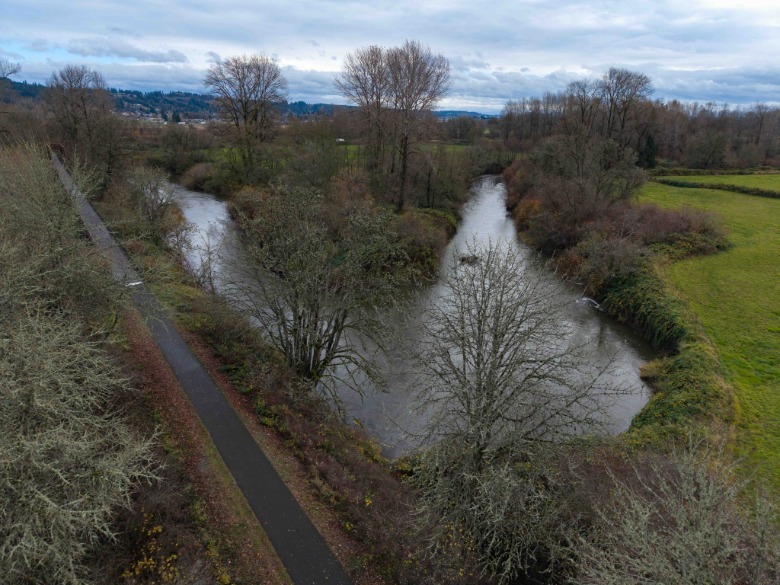
Both still photos and video look fantastic, with stills up to 50 megapixels in size and video up to 4k 120fps. The image quality is absolutely glorious, and with D-Log M video and RAW image capture capability, the Air 3S is largely capable of professional results, though the fixed aperture of the lens will make it somewhat less appealing to pros.
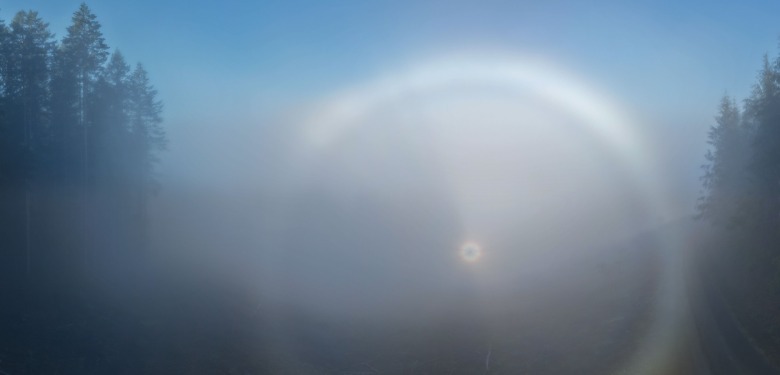
Among the many intelligent features available in the Air 3S, I want to particularly highlight the new “Free Panorama” mode, in which you select the top and bottom corners of the area you want to capture, and the drone automatically shoots a series of photos covering your selected area. It’s far better than other automatic panorama modes which shoot a fixed size and pattern, as it delivers complete creative control. One image I captured of a circular rainbow in the fog would have been extremely challenging to capture any other way than with the Free Panorama mode.
A familiar design missing one key upgrade
You could easily be forgiven for mistaking the Air 3S for the Air 3, and in fact they’re outwardly as similar as are their names. The main visual distinction is the LIDAR sensor on the front prow of the drone above the camera gimbal, but other than that, the “S” in its name, and the slight variation in the appearance of the camera, they look practically identical. There’s nothing wrong with this, as this design has long been proven to be highly effective.
What’s not so great is the gimbal protector, which is of the cheap plastic variety that’s cumbersome to remove and attach. I would have much preferred to see DJI opt for the same gimbal protector as is available for the Mavic 3 series of drones, which is high quality, more protective, and easy to remove and attach.
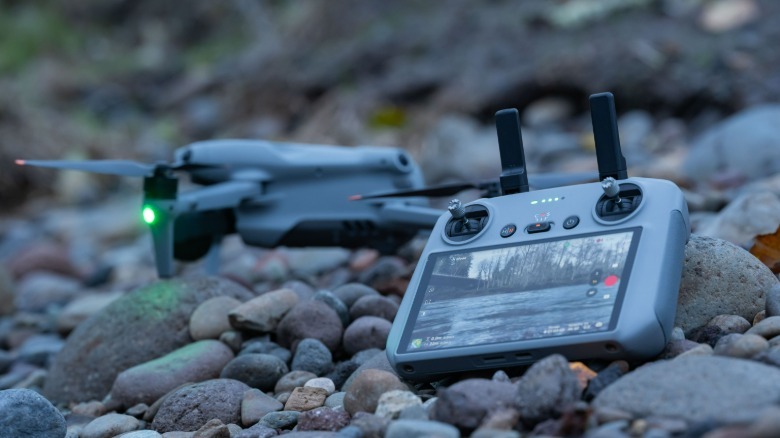
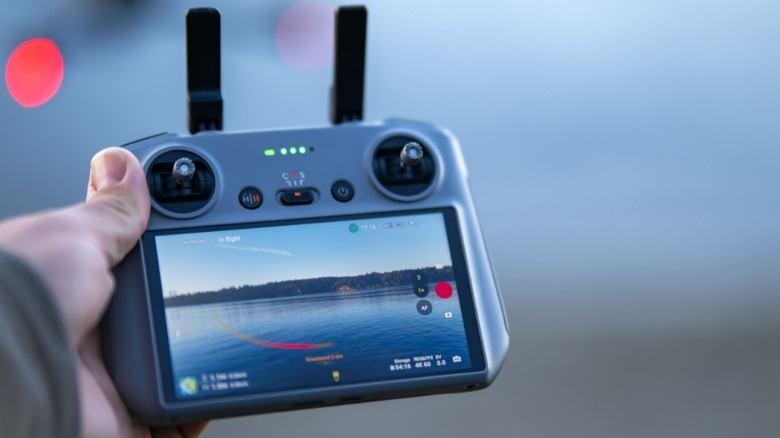
The Air 3S is compatible with the preexisting RC-N3 and RC 2 remote controllers, both of which get the job done, though I much prefer the RC 2 with its built in screen. Unfortunately, it’s not compatible with the top-of-the-line DJI RC Pro controller.
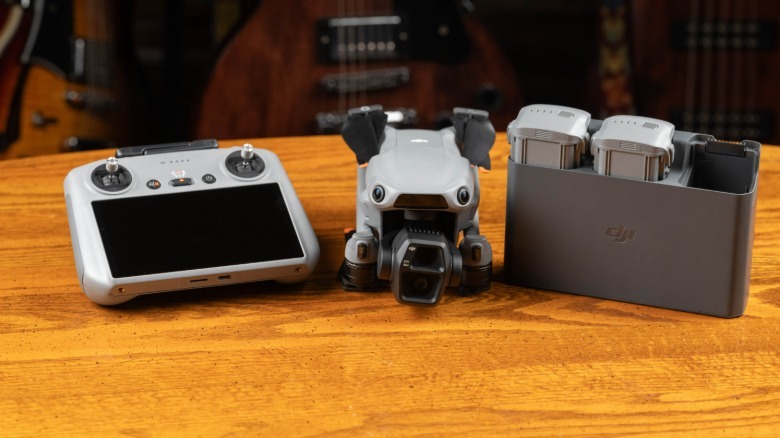
In terms of battery life, the Air 3S delivers up to 45 minutes of flight time per charge, which is quite a long time to be in the air, and typically enough for most of my typical aerial video/photo shoots. For a full day of filming you’ll still probably want a spare or two, but a single battery still goes a long way with the Air 3S.
Sticks to subjects like glue and easily dodges obstacles
With upgraded ActiveTrack 360 and a new LIDAR sensor, the DJI Air 3S is more capable than ever of detecting and following subjects you wish to film, and the various objects you’d rather not crash into. I was immediately struck by how the drone is able to instantly identify people even at a great distance in a complex environment, and at how it’s able to keep track of subjects even when they’re partially obscured.
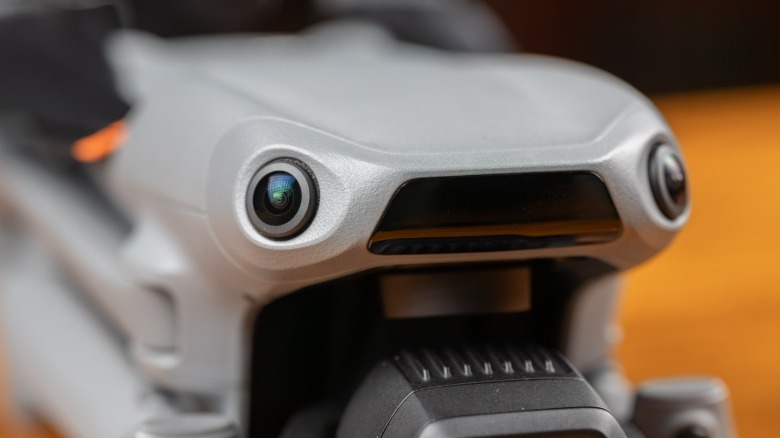
Obstacle avoidance certainly sees a massive upgrade thanks to the LIDAR sensor, particularly in low light. It essentially eliminates the limitations previously placed upon DJI drones by the nature of optical obstacle detection that prevented such functionality at night, or in dimly lit environments.
I had the accidental occasion to test the return to home function of the Air 3S when I stupidly powered off the controller while the drone was still in the air (I had intended to power down the camera I was filming with in my other hand). This occurred when the Air 3S was at ground level in a forest, but the drone had no trouble ascending through the canopy and flying around trees to get back to the home point. I did have to retake manual control at this point because there wasn’t a suitable landing zone, but it was nonetheless a highly impressive feat.
Onboard storage and improved image transfer capabilities
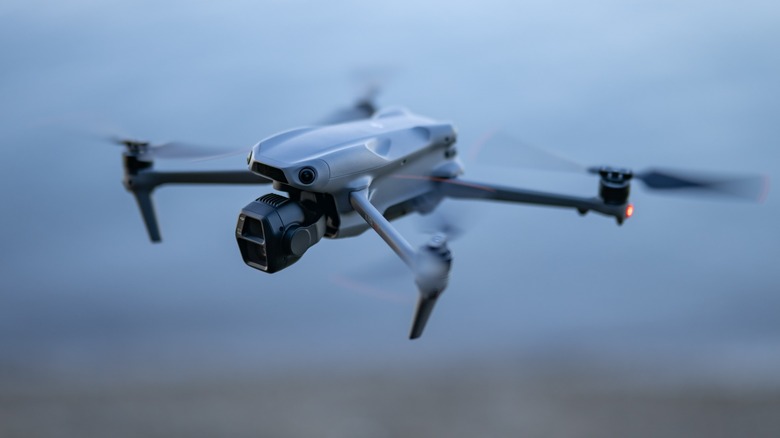
The previous DJI Air 3 had only 8GB of onboard storage as a backup to the microSD card, which was better than nothing, but definitely not adequate for extended video recording. Fortunately, the Air 3S benefits from greatly expanded storage up to a whopping 42GB. Even after a full day of filming and photography, in which I exhausted two batteries worth of power, I didn’t even come close to filling the internal storage despite shooting at 4K 60fps the whole time. With that said, it’s best to have a microSD card in there anyway, so that there’s no risk of running out of storage while you’re in the field.
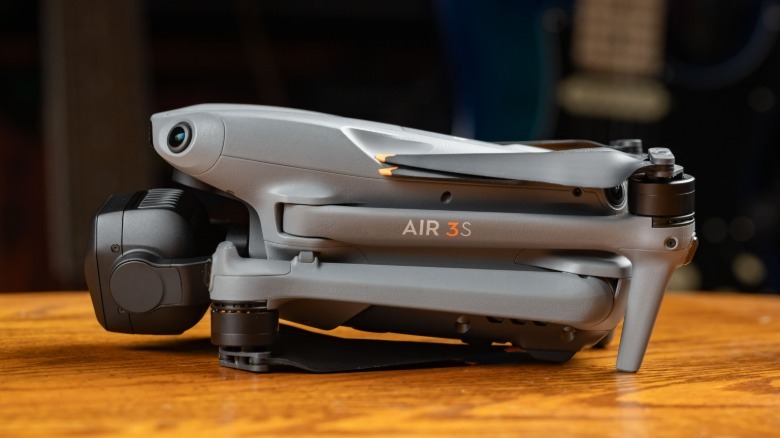
One really cool feature of the Air 3S is its ability to wirelessly transfer photos and videos to your mobile device while the drone is powered off. This sounds like it should be impossible, but in actuality when you power the drone off it goes into a sleep mode for 12 hours rather than fully shutting down. This means that you’re able to connect to it via the DJI Fly app on your device and access the files you’ve captured, which is far preferable to having it sitting there powered on, blinking with its internal fans humming. This low power mode does drain a small amount of juice, but not so much that it’s a noticeable problem, and you can turn it off in settings if you like.
I also want to very quickly touch upon how well the Air 3S stands up to high winds. I flew on a very gusty day where the drone frequently reported strong wind warnings, yet it remained stable in the air and I was able to trust it to avoid obstacles and track subjects despite the challenging conditions.
Reasonably priced, though DJI has many tempting alternatives
Starting at $1,099, the Air 3S falls neatly into the midrange of DJI’s current lineup. It’s worth noting, however, that the Air 3S kit I tested was the top-range Fly More combo with the DJI RC 2, which is $1,599. This is the bundle I would definitely recommend if you can afford it, as a controller with a built-in screen such as the RC 2 is far superior to one like the RC-N3 included in the basic Air 3S bundle, which requires you to use a phone or tablet with it. Additionally, as with any drone, you will almost certainly want extra batteries, which is why I personally always opt for a bundle with extra batteries when buying a new drone.
With that said, DJI has a number of other highly compelling drones priced closely to the Air 3S. The Mavic 3 Classic, for example, features a huge Micro 4/3 sensor and starts at just $1,279. Alternatively, the DJI Mini 4 Pro starts at just $759 and is much more convenient from a size and weight perspective.
While I had neither of these drones on hand to compare directly against the Air 3S, I did test it side-by-side with the extremely affordable DJI Neo and the top-of-the-line Mavic 3 Pro, which features the same primary sensor as the Mavic 3 Classic. While of course the Air 3S beats the Neo by a big margin (it had better, at more than 5X the price), what surprised me was how comparable image quality of the Air 3S was to the Mavic 3 Pro, despite being about half the cost of that drone. In some regards (such as subject tracking, obstacle avoidance, and slow motion filming) the Air 3S is actually superior to the Mavic 3 Pro.
DJI Air 3S Verdict
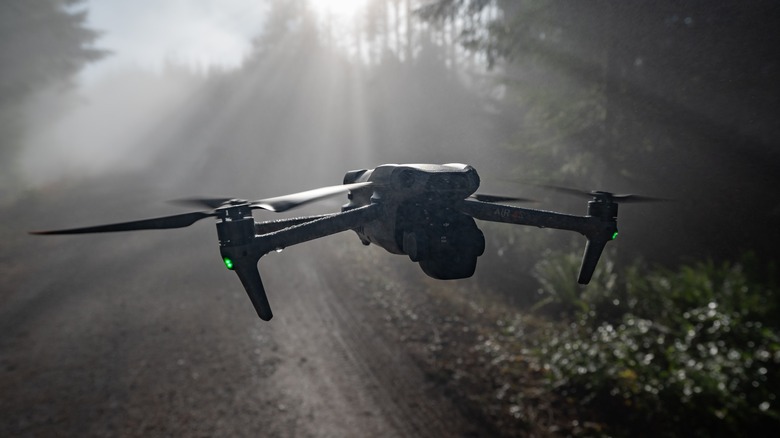
The DJI Air 3S managed to surprise me by being more than just a mild upgrade over its predecessor, so that despite its almost identical appearance this drone manages to feel entirely new and exciting. The camera upgrade is a big deal, as that new 1-inch sensor makes a significant difference to image quality, and if you want to shoot slow motion with a drone this is certainly the one to choose.
This is the first time I’ve come across a consumer level drone equipped with a camera which produces photos and videos to rival the Mavic 3 Pro and, with its new LIDAR system and features such as Free Panorama mode, the Air 3S actually exceeds DJI’s own flagship in some regards. The only serious downside to the Air 3S in this comparison is its lack of a variable aperture, which is available in the Mavic 3 Classic and Pro.

When I can only find a few minor gripes such as a less-than-stellar gimbal protector to complain about, that should tell you what a solid, well-rounded drone the Air 3S really is. If you’re looking for a drone with great imaging capabilities, the ability to stand up to strong wind, and an unmatched subject tracking and obstacle avoidance system, then the Air 3S is for you. It’s arguably the most capable consumer-level drone available right now.
The DJI Air 3S is available from DJI’s online store starting at $1,099.
Source: http://www.slashgear.com/1731560/dji-air-3s-review-specs-pricing-upgrades/
You may also like

