 drone-reviewm.com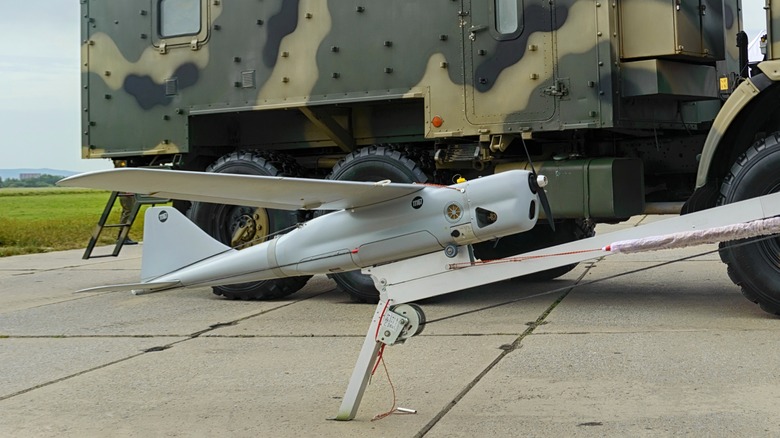
Drones are an essential part of modern warfare; they can perform precision strikes, assassinations, and reconnaissance — all without risking any lives on the side operating the drone. In the days before unmanned aerial vehicles, planes would be used to carry out similar tasks. Taking a loss in those days was also more severe, as those losses weren’t easily replaced. A pilot can take months to train while developing a truly skilled aviator can take years, so the side with the best drones tends to have a huge advantage in the conflict zone.
Unmanned aerial vehicles have also been a major difference maker during the current war in Ukraine. In February, one of the world’s major military powers decided to invade its neighbor — which is one of Europe’s poorest countries. Some of the more optimistic pundits still believed Kyiv would fall within a few days, but a combination of Russian incompetence, Ukrainian determination, and military aid (including a few drones) from sympathetic nations has led to a situation no one really predicted. Russia was pushed back from the capital, and the war is mainly being fought in the eastern side of the country, centering around the areas Russia is attempting to annex.
So, with drones being a major difference maker, victory could depend on one side getting the most out of its UAVs while taking out those of the enemy… and Ukraine has just gotten its hands on a piece of tech that will help it do just that.
How does the Vampire anti-drone system work?
Traditionally, drones tend to be countered by jamming their ability to communicate; this involves interfering with the radio signal connecting the drone to its operator. To counter this, many drones and similar vehicles are fitted with anti-jamming devices, which has led to a kind of jamming/anti-jamming arms race.
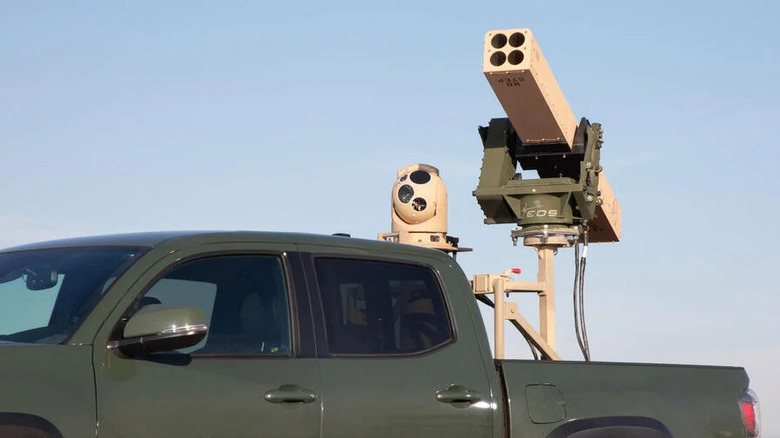
The Vehicle-Agnostic Modular Palletized ISR Rocket Equipment, or Vampire, doesn’t really bother doing any of that — it just blasts the enemy drones out of the sky with rockets. The lightweight system is incredibly mobile and designed to be fitted to a wide range of vehicles. If push comes to shove and a Ukrainian unit is short on supplies, it could bolt a Vampire to the back of a pickup truck and still effectively hunt Russian drones. Installation requires two people, two hours, some basic tools, and any vehicle with a bed. Everything, including a power supply, is included on the pallet.
A United States Department of Defense announcement says Ukraine is being supplied with the counter-drone system as part of the latest $3 billion aid package. The exact number of Vampire systems making their way to Ukraine is unknown, but in a conflict with such fine margins, anything can make a difference.
The Russians aren’t the only ones with drones
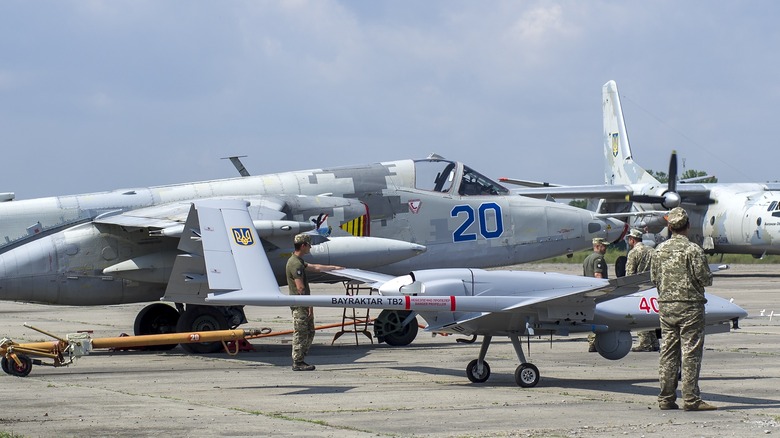
Drones are a large part of modern warfare, and the Ukrainian side of the conflict has put its own unmanned air vehicles to good use since the beginning of the conflict. The drone most closely associated with the Ukrainian Armed Forces is the Turkish Bayraktar TB2. The Bayraktar is relatively cheap, especially when compared to things like the U.S.-manufactured Predator Drone. Cheap is a relative term, of course; if you were somehow allowed to buy one, a TB2 would still set you back millions of dollars.
Don’t let the price tag fool you, though — with the TB2, you’ll get a lot of literal bang for your buck. Its manufacturer Turkey is a NATO member, so the drone’s standards will align with those set by the world’s richest and most powerful military alliance. The lightweight drone is capable of operating in 27-hour long stints and has been put to good use by the Ukrainian military. At last count, the nation had lost eight of the TB2s in its arsenal. That loss is offset somewhat by the dozens of pieces of Russian material the drones took out in the process.
Not all drones have to be lethal. One of the pieces of flying tech that is giving Ukraine an edge hasn’t got any weapons at all. The spy gadget-esque Black Hornet is 6-inches long and can travel around a mile from its operator. Britain and Norway have sent around 850 of the microdrones to the conflict zone, where they will serve a number of purposes. The tiny drones are ideal for scouting out enemy positions and buildings, which should give Ukrainian forces a better picture of the battlefield and allow them to plan effectively. They’re also helpful in search and rescue operations.
Source: http://www.slashgear.com/989545/how-america-is-fighting-russian-drones/
You may also like

